How Accurate Are AI Stock Predictions? The Data
By ASignal Research · Reviewed by Valera Bolt
How accurate are AI stock predictions? Less accurate than the adverts say, and more useful than a coin flip. Public studies show a small, real edge on direction over short periods. No public study shows a model that predicts exact prices reliably. Every accuracy number depends on the task and the time window.
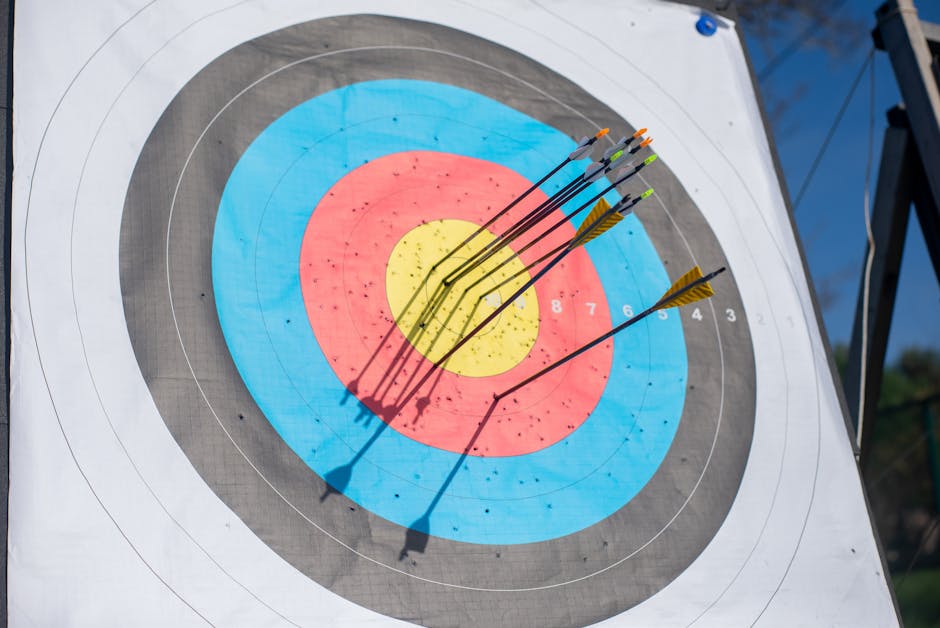
How Accurate Are AI Stock Predictions?
There is no single accuracy number, because "prediction" means several different tasks.
Here is the one-sentence definition: prediction accuracy is the share of forecasts that turned out right, measured on one task, over one time window, on data the model had not seen before.
Change the task or the window, and the number changes. A model can be good at reading news and poor at naming next month's price. So the first question is always: accurate at what?
The question matters because many people already use these tools. In March 2026, 62% of American retail investors used AI to inform investment decisions, according to an Investing.com survey of 938 people.
What Do Public Studies Say?
Four public sources give a fair picture. The table shows each one.
| Kind of prediction | What the study found | The catch |
|---|---|---|
| Direction after a news headline | About 90% hit rate on the first market reaction | Nobody can trade that first reaction |
| Direction of company earnings | A claim that GPT-4 beat human analysts | The paper was withdrawn in February 2025 |
| Monthly stock returns | Machine learning beat older forecasting methods | The main signals were already well known |
| Facts from company filings | 81% of answers wrong or refused | A model that gets facts wrong cannot forecast well |
News headlines. Alejandro Lopez-Lira and Yuehua Tang asked GPT-4 if a headline was good or bad news for a stock. They first posted the study in April 2023 and last updated it on October 28, 2025. GPT-4 reached about a 90% hit rate on the first market reaction to the news. A hit rate is the share of days on which the scores pointed the right way.
That is a high number. But the authors call this first reaction "non-tradable". The price moves before anyone can act on the headline. For the slower move that follows, the scores still helped, mostly for small stocks and for bad news.
Earnings direction. In July 2024, three researchers reported that GPT-4 predicted the direction of company earnings better than human analysts. The result was widely shared. On February 20, 2025, the authors withdrew the paper. Their note says a co-author "identified inconsistencies in the data and analyses" during a new check.
A withdrawn paper is not proof that the idea is wrong. It is proof that one headline number is not enough.
Monthly returns. Shihao Gu, Bryan Kelly and Dacheng Xiu tested many machine learning methods on US stock returns. The Review of Financial Studies published the paper in 2020. Machine learning described expected returns better than older methods. Trees and neural networks did best. But all methods agreed on the same small set of signals: momentum, liquidity and volatility. Momentum is the habit of recent winners to keep rising for a while. The machines measured known effects better. They did not find a secret.
Facts first. A forecast is only as good as its inputs. In the FinanceBench test from November 2023, GPT-4-Turbo with a search step answered wrong or refused on 81% of 150 questions about company filings. We cover this problem in our article on LLM hallucination risk.
Why Is There No Single Accuracy Number?
There are four reasons.
- The task changes the score. Direction is easier than exact price. With only two choices, up or down, a coin is right about half the time. An exact price has no such floor.
- The window changes the score. A model can read today's news well and still know nothing about next year.
- NEUTRAL is hard to grade. If a system says "no clear direction", was it right? Many accuracy figures drop these cases, and that makes the number look better.
- Past tests are not live results. A backtest is a test on old data. It is easy to tune a model until old data looks good. The market does not give the same exam twice.

Does an Edge Last Once Everyone Has the Tool?
Usually it gets smaller. The same headline study found that the strategy earned less as more people started to use LLMs. When many investors read the news with the same model, prices adjust faster. The advantage shrinks.
A forecast that everyone has is already in the price. Weather is kinder: the rain does not read the forecast and change its plans.
What Does Honest Accuracy Look Like?
We do not publish an accuracy figure for our own system on public pages. We can show how often it declines to pick a side.
As of July 25, 2026, 94.4% of ASignal's current signals were NEUTRAL. In one batch week in June 2026, 442 of 526 signals came back NEUTRAL, which is 84%. In one week in July 2026, we logged 78 direction changes across about 540 tickers. None was a full reversal from BULLISH to BEARISH.
These numbers do not prove accuracy. They show a system that says "we do not know" most of the time. A tool that is certain about every stock, every day, is the one to doubt.
Our anchor example is Invitation Homes (INVH). On November 19, 2026, all three of our frameworks read it NEUTRAL. A framework is a fixed way of judging a stock, such as a value view or a macro view. NEUTRAL is a legitimate answer. More on the process is in how AI stock analysis works.
Five Questions for Any AI Accuracy Claim
A reader can test any accuracy claim with five questions.
- What was predicted? Direction, an exact price, or earnings?
- Over what window? One day, one month, or one year?
- Compared with what? A coin flip, the market index, or human analysts?
- On old data or live? A backtest is weaker evidence than a dated public record.
- What happened to the NEUTRAL calls? If they were dropped, the figure is too high.
A claim that answers none of these is marketing. Our article on AI and human analysts looks at the same evidence from another side.
FAQ
How accurate are AI stock predictions? AI stock predictions show a small edge on direction over short periods in public studies, not reliable exact prices. One study reported about a 90% hit rate, but only for a first market reaction that nobody can trade.
Can AI predict stock prices exactly? No public study shows an AI model that predicts exact stock prices reliably. The published results are about direction, not price levels. A current price also needs a live data tool, because a model's memory is a snapshot of the past.
Is AI better than human analysts at predicting earnings? This is not settled. A 2024 paper claimed GPT-4 beat analysts on earnings direction, and its authors withdrew it on February 20, 2025, to review the data.
Why do some AI tools advertise very high accuracy? High advertised figures often come from backtests, from short windows, or from dropping the unclear cases. Ask what was predicted, over what window, and against what baseline.
How This Analysis Was Produced
This article uses four public sources. The study by Alejandro Lopez-Lira and Yuehua Tang (arXiv 2304.07619, first posted April 2023, updated October 28, 2025) supplies the 90% hit rate and the adoption finding. The arXiv record for paper 2407.17866 supplies the 2024 earnings claim and the withdrawal note of February 20, 2025. The paper by Gu, Kelly and Xiu (Review of Financial Studies, 2020) supplies the machine learning results. FinanceBench (arXiv 2311.11944, November 2023) supplies the 81% figure. The 62% adoption figure comes from an Investing.com survey of 938 investors in March 2026. The pipeline figures are ASignal's own, dated in the text. The anchor ticker, INVH, shows only the direction from our public debate card as of November 19, 2026. The precise verdict for any covered stock is subscriber-only.